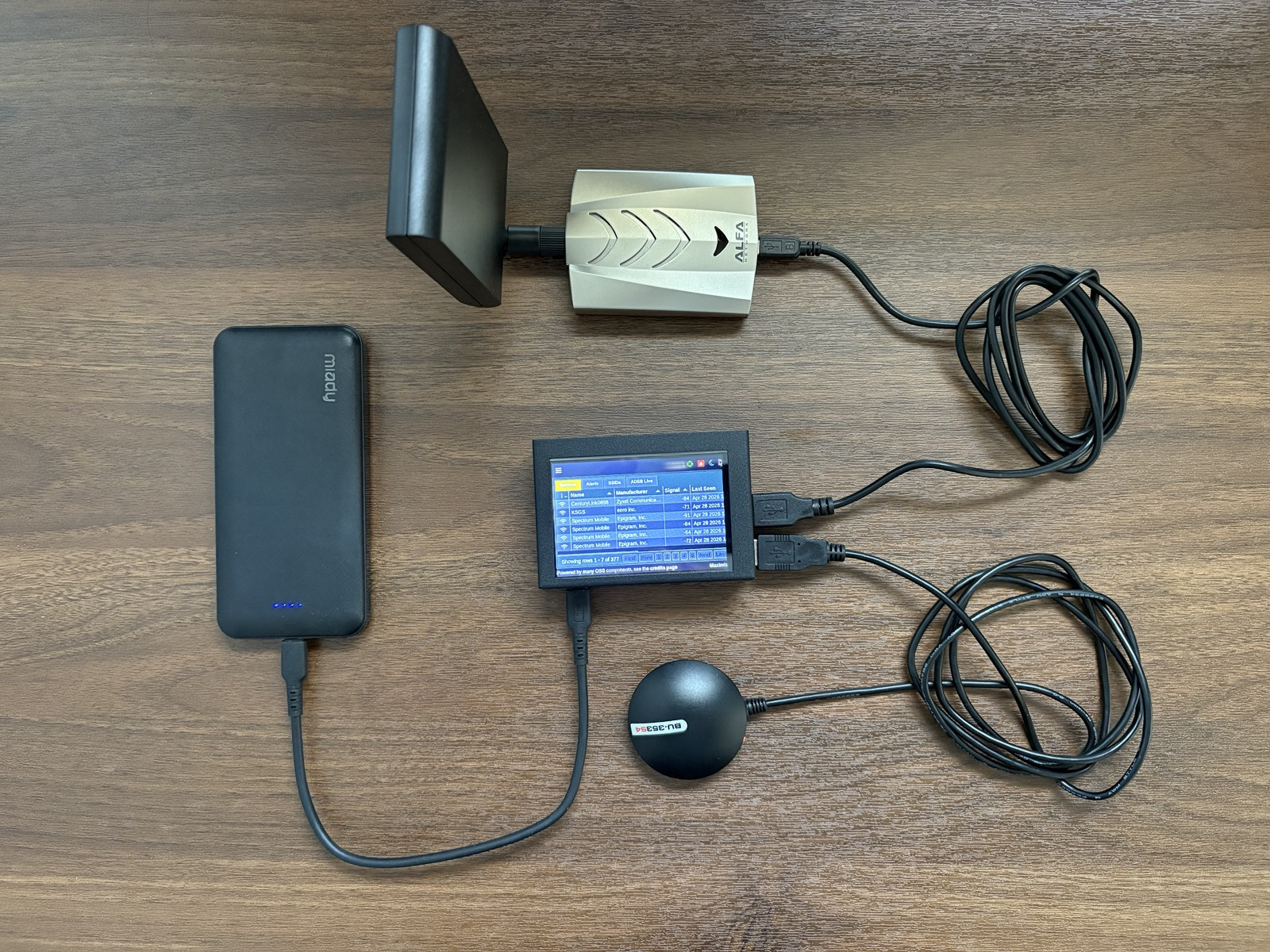
Wardriving is driving around passively capturing wireless data — SSIDs, signal strength, encryption types, GPS coordinates. I wanted to actually do it, so I built a dedicated Pi rig that boots straight into Kismet. Plug it in, drive, collect. The Alfa adapter handles monitor mode and the GPS puck geo-tags everything automatically.
Raspberry Pi 4B running Raspberry Pi OS with a GUI and Kismet installed, with a touchscreen attached for live output.
Alfa AWUS036ACHM running in monitor mode for passive 802.11 packet capture across 2.4GHz and 5GHz bands.
GlobalSat BU-353S4 USB GPS receiver feeding location data directly into Kismet, tagging every captured network with coordinates.
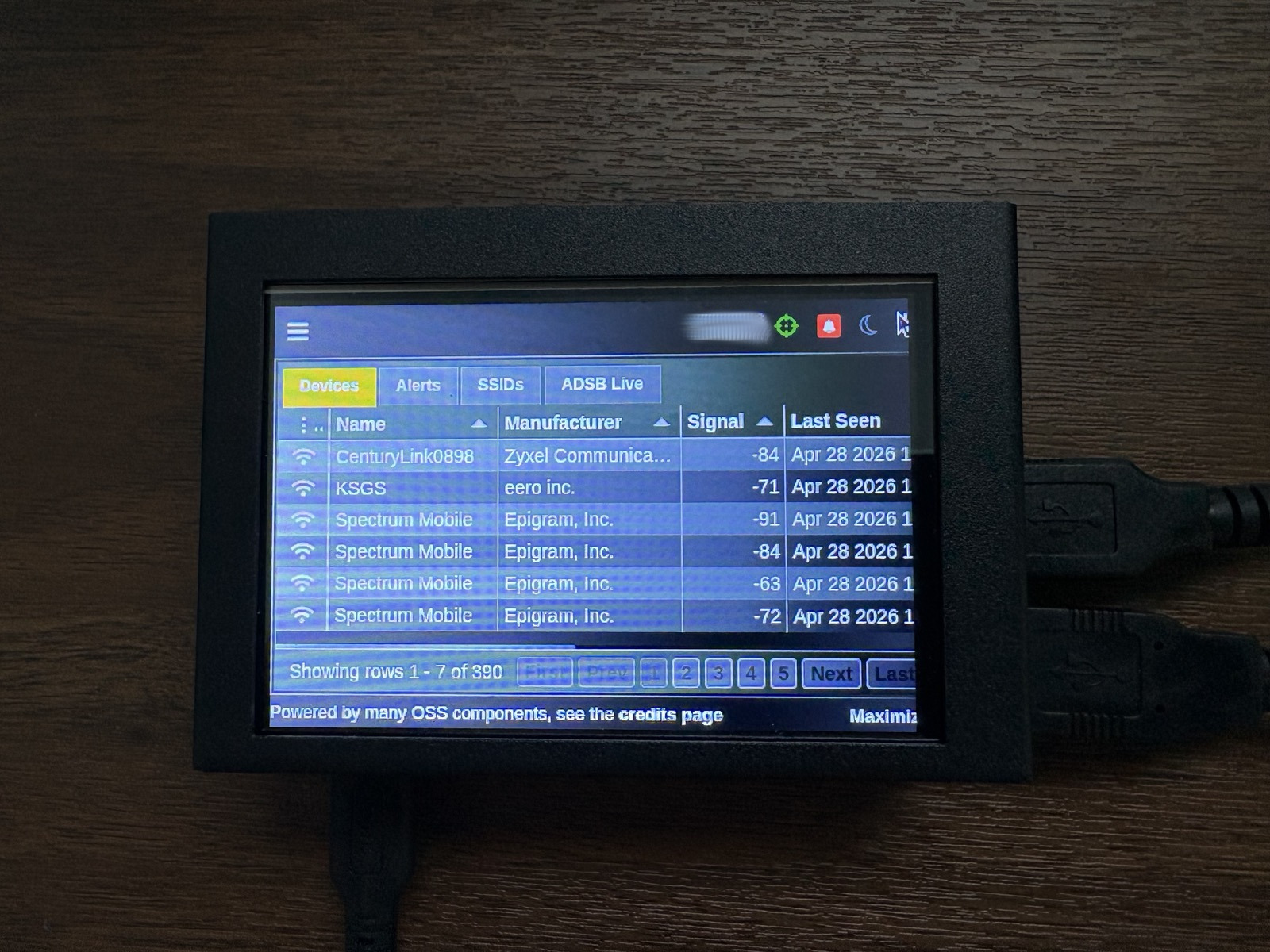
Small display attached to the Pi showing the live Kismet interface, making it fully self-contained without needing a separate device.
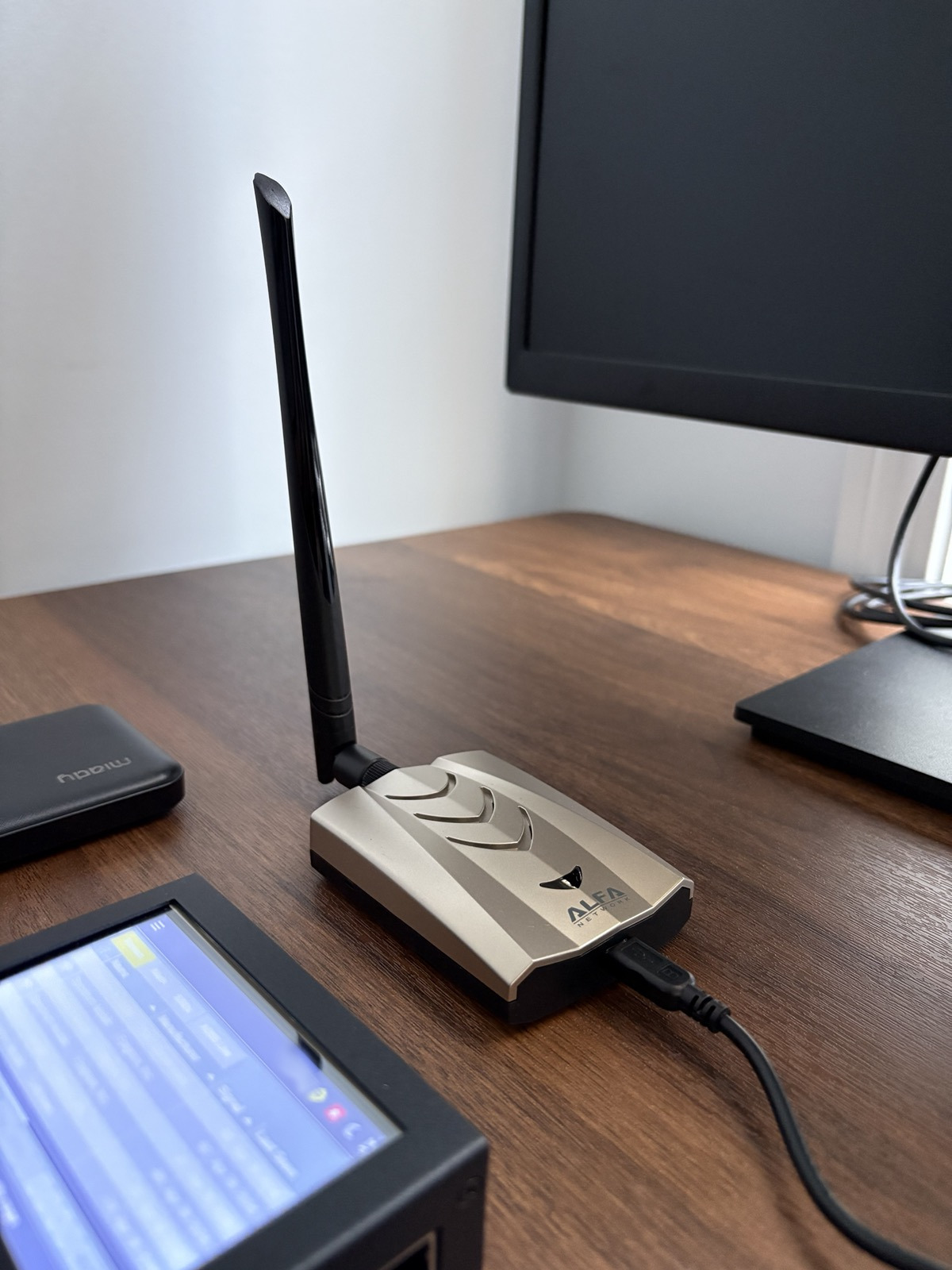
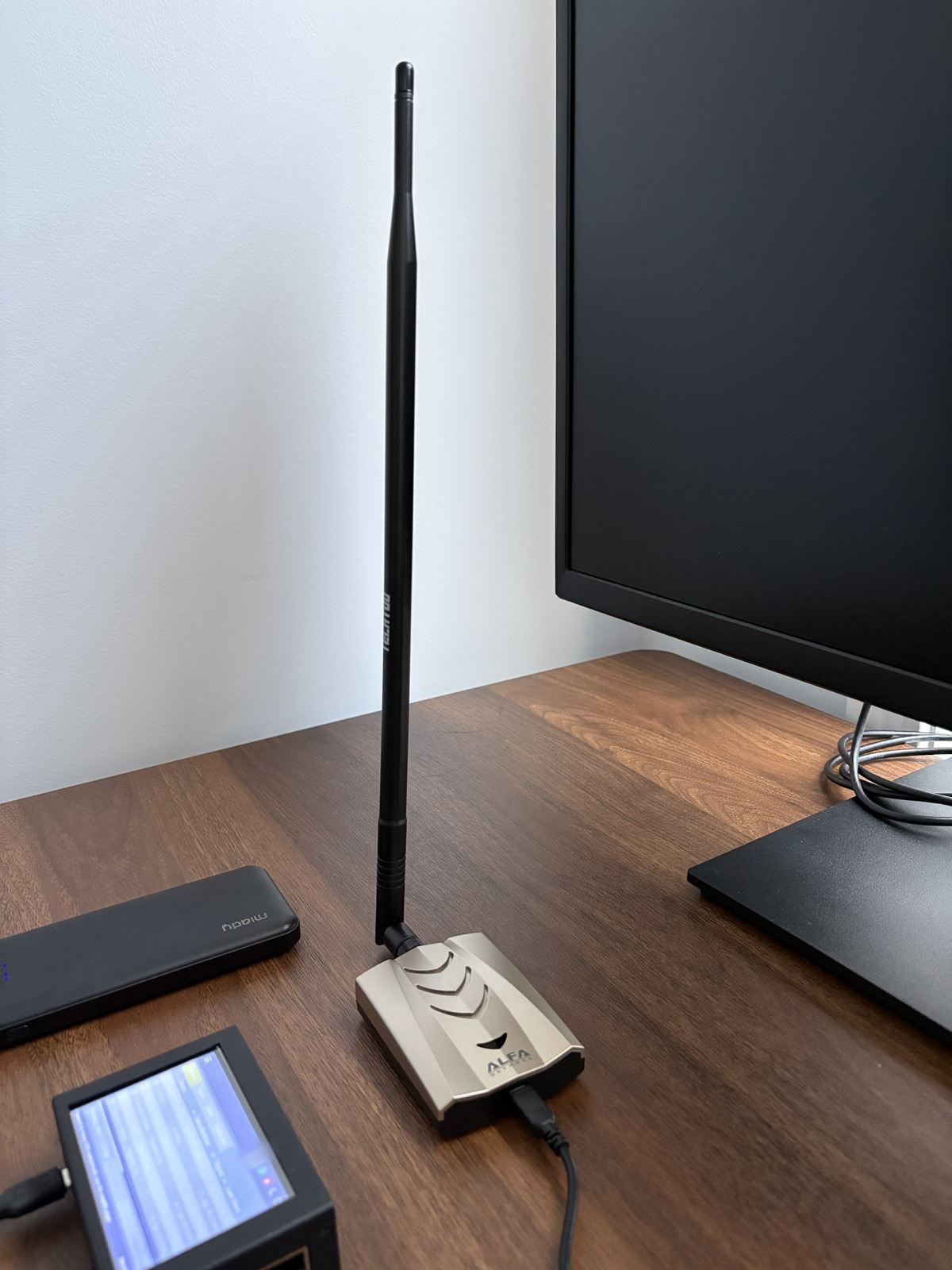
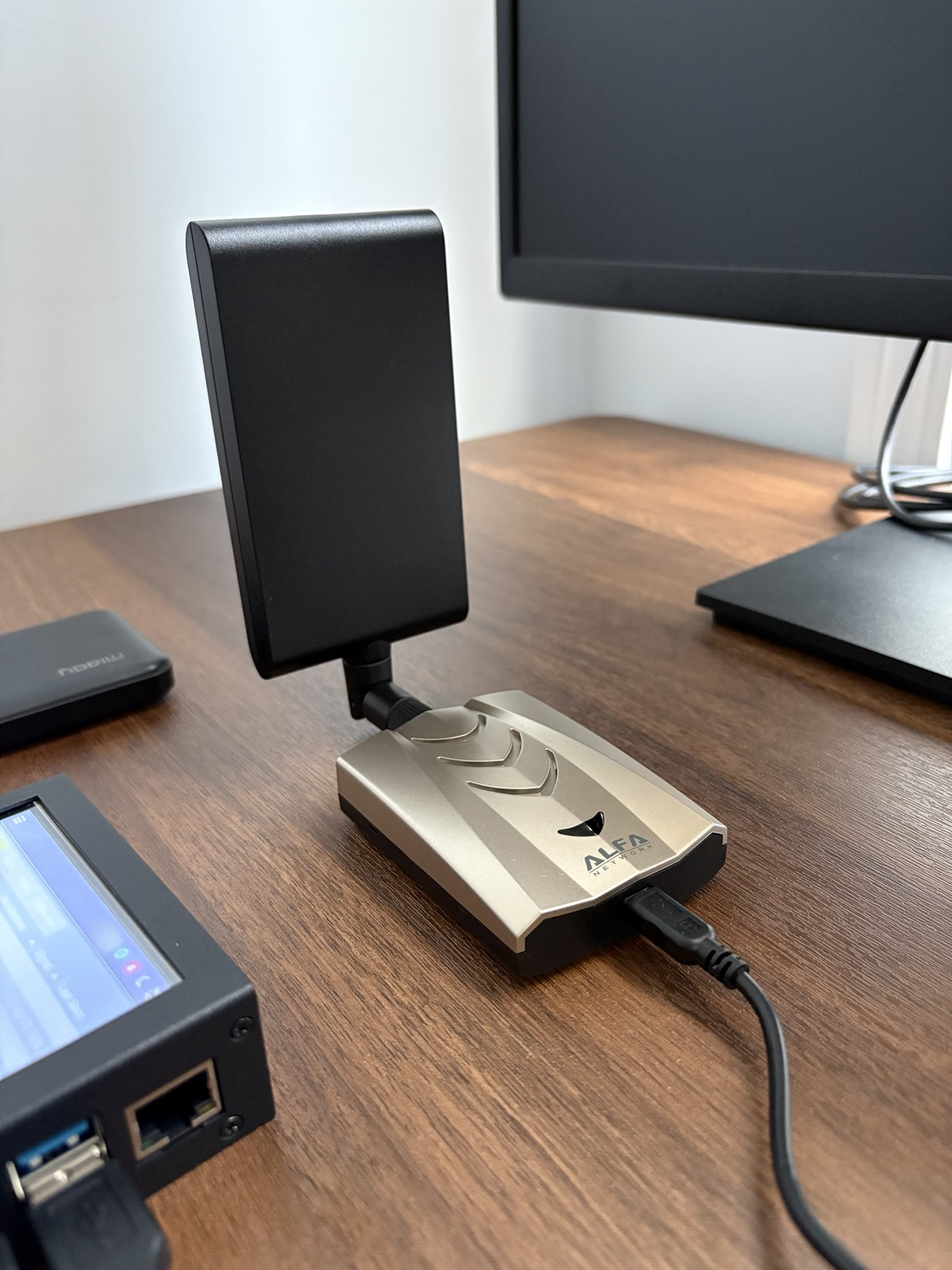
Different antennas, different use cases. I picked up a few to experiment with — each one changes how far you reach and where you're pointing.
Default omnidirectional antenna. Short range, compact.
3x the range of stock. Omnidirectional, picks up far more networks.
Focused beam in one direction. Precision targeting of a specific area.
Kismet launches on boot via a systemd service with the Alfa adapter and GPS puck set as capture sources. Power it on and it's already running — no keyboard, no setup. Logs are stored locally and can be pulled off later and opened in GPSPrune or Google Earth via the exported KML file.
The annoying part was that make
kept crashing on the Pi, so I ended up cross-compiling on my workstation targeting ARM64 and transferring
the binaries over manually. It worked, but after all that I found out I could've just flashed DragonOS
on the Pi — it comes with Kismet pre-installed. Lesson learned: research the ecosystem before
spending hours building from scratch.